
How Artificial Intelligence Is Transforming Real Estate in 2025

Join Our Newsletter Send Contents Related Blogs What Is Conversational AI? How It Works, Benefits, and Future Trends What Is a Virtual Assistant? A Complete Guide to VAs in 2025 What Is Admission Management Software? How It Streamlines the Admissions Process for Institutions How to Train an AI Assistant: A Comprehensive Guide to Creating Smart, Effective Virtual Helpers Other Categories Blog CRM Edit Template How to Train an AI Assistant: A Comprehensive Guide to Creating Smart, Effective Virtual Helpers Whatsapp Linkedin X-twitter Introduction Conversational AI is quickly becoming one of the most powerful tools in modern business, especially when it comes to enhancing customer experiences. But for beginners, the term might sound technical and intimidating. This guide breaks it down in simple language—what conversational AI is, how it works, why businesses are using it, and what the future holds. Whether you’re a startup owner, student, or curious marketer, you’ll get a clear understanding of how conversational AI can make a difference in your world. What Is Conversational AI? Conversational AI refers to a group of technologies that enable computers and machines to simulate real, human-like conversations. These conversations can happen via text (like a chatbot) or voice (like Siri or Alexa). To put it simply: Conversational AI allows a machine to understand what you’re saying, figure out what you mean, and respond in a way that makes sense—just like a human would. Common Examples:Chatbots on websites that help you navigate, book tickets, or answer FAQsVoice Assistants like Google Assistant or Amazon AlexaAutomated customer support agents on apps and phonesInteractive voice response (IVR) systems used in customer service phone calls Think of Conversational AI as your digital helper—available anytime, anywhere, understanding your needs in real time. How Conversational AI Works – Step by Step 1. Input CollectionThe AI receives input from the user. This could be text typed in a chatbox or voice picked up by a microphone. 2. Natural Language Understanding (NLU)The system analyzes what was said or typed to understand intent (e.g., question or command) and identify entities (e.g., “change my flight to New York”). 3. Processing and Response CreationUsing AI algorithms, training data, and logic, the system selects the most appropriate reply. 4. Output ResponseThe AI responds back in a human-like way—text, voice, or even visual options like calendars. 5. Continuous LearningThe system improves over time by learning from interactions and user behavior. Why Is Conversational AI Important? 24/7 Customer SupportConversational AI provides instant help anytime, any day. ScalabilityOne chatbot can handle thousands of conversations simultaneously. Cost EfficiencyBusinesses can reduce large support costs and save billions annually. Multilingual SupportAI communicates in multiple languages, enabling global reach. PersonalizationAI learns user preferences and delivers tailored experiences. Real-World Applications Retail & E-commerceProduct recommendations, return tracking, sale reminders Banking & FinanceAccount balance checks, transactions, fraud alerts HealthcareAppointment scheduling, symptom checking, reminders Travel & HospitalityBooking management, travel guides, real-time updates EducationVirtual assistants, course suggestions, FAQ support Fun Fact: Sephora uses a chatbot to give customers beauty tips and help with product choices, increasing engagement significantly. Market Stats: How Popular Is Conversational AI? 78% of companies globally are using some form of AI.71% of companies in 2025 use generative AI for customer-facing operations.The market is expected to reach $29.8 billion by 2028. Conversational AI is not just the future—it’s the present. Businesses that fail to adopt it risk losing efficiency and customer satisfaction. Conversational AI vs Traditional Chatbots Conversational AI uses NLP to understand natural language, learns over time, supports long conversations, remembers past interactions, and integrates across multiple platforms. Traditional chatbots are rule-based, limited in understanding, and lack memory and flexibility. Popular Tools to Build Conversational AI Google Dialogflow – Beginner-friendly with pre-built agentsAmazon Lex – Ideal for voice-based applicationsMicrosoft Bot Framework – Scalable for developersIBM Watson Assistant – Advanced enterprise solutionRasa – Open-source and highly customizable How to Implement Conversational AI (Beginner-Friendly) Define the problem you want to solveChoose the right platform or toolWrite simple conversation scriptsTrain the AI with real dataLaunch, monitor, and improve continuously What’s Next: Future of Conversational AI Voice-first interfaces will become dominantEmotion-aware AI will detect user feelingsAI-human collaboration will improve efficiencyOmnichannel conversations will become seamlessGenerative AI will enhance natural responses By 2030, conversational AI is expected to become the primary interface between customers and brands. Emerging Trends in Conversational AI (2025) Hyper-Personalized InteractionsAI delivers highly tailored experiences based on behavior and preferences. Multimodal InterfacesText, voice, images, and gestures combine into one seamless interaction. Emotionally Intelligent AIAI recognizes emotions and responds appropriately. Voice Search OptimizationContent is being optimized for conversational voice queries. Low-Code and No-Code PlatformsBusinesses can build AI solutions without deep technical skills. Integration with IoTAI connects with smart devices and wearables. Real-Time Multilingual ConversationsInstant translation enables global communication. Ethical AI & GovernanceFocus on fairness, transparency, and responsible AI use. Ethical and emotionally aware AI will define the future of human-machine interaction. Final Thoughts Conversational AI is not just a tool—it’s a transformation. From chatbots to intelligent assistants, it is changing how businesses interact with customers. The best part is that you don’t need to be a tech expert to get started. If you want to improve customer service, boost engagement, and future-proof your business, now is the time to explore conversational AI.
What Is a Virtual Assistant? A Complete Guide to VAs in 2025

Join Our Newsletter Send Contents Related Blogs What Is Admission Management Software? How It Streamlines the Admissions Process for Institutions How to Train an AI Assistant: A Comprehensive Guide to Creating Smart, Effective Virtual Helpers B2B vs. B2C CRM: Key Differences, Use Cases & Which One You Need in 2025 Understanding the Types of Customers in Customer Service: A Guide to Tailoring Your Approach Other Categories Blog CRM Edit Template Understanding the Types of Customers in Customer Service: A Guide to Tailoring Your Approach Whatsapp Linkedin X-twitter https://youtu.be/ybJpMSlGs1Y?si=ZCo3WtMsSN4HpcOL Introduction: Why Virtual Assistants Matter in 2025 Today’s business landscape is digital, fast-moving, and competitive. Time is your most valuable resource, and spending it on routine tasks can hold back growth. That’s where virtual assistants come in. Virtual assistants are remote professionals who provide a range of services—administrative, technical, creative, and operational—allowing business owners to delegate work and focus on strategy. From inbox management to client follow-ups and content creation, a skilled virtual assistant can become your right hand in running your business. 📈 Key Statistics Revealing the Growth of the Virtual Assistant Industry To better understand why virtual assistants are becoming a core business strategy, let’s explore some eye-opening statistics from industry experts and research reports, including insights from Gladys Gatotho’s report: 🌍 Market Expansion The global virtual assistant market is expected to grow to USD 14.1 billion by 2030, as projected by Grand View Research. This reflects the growing reliance on remote administrative support in the digital economy. 💰 Cost Savings Companies can reduce costs by up to 78% by hiring virtual assistants instead of full-time employees (Source: There is Talent). This includes savings on salaries, office space, benefits, and training. 🎯 Specialization Is Rising There’s an increasing demand for niche VAs who offer specialized services, such as bookkeeping, CRM management, or real estate support. Platforms like Upwork and Fiverr are seeing rising profiles offering targeted skills. 🌐 Freelancing as a Long-Term Career A 2024 Fiverr survey of over 10,000 Gen-Z freelancers found that 70% plan to freelance long-term, which signals a growing, sustainable VA talent pool globally (Reported by CNBC). 🌎 Remote Work & Geographic Flexibility 41% of global workers now prefer remote work, according to Owl Labs. VAs contribute to a distributed, global workforce that’s not limited by geography. FlexJobs reports that 51% of professionals want fully remote jobs, while 46% prefer hybrid roles, showing a significant shift in work culture toward flexible arrangements. 📦 Small Business Enablement According to SCORE, small businesses are turning to VAs as a cost-efficient solution to expand operations without committing to full-time staff. 🔧 Technology Adoption 95% of Slack users prefer it over video calls, showing how collaboration platforms like Slack, Zoom, and Google Workspace are enabling seamless VA-client relationships. 📚 Upskilling & Learning Demand With the rise in VA demand, online learning platforms like Coursera and Udemy are seeing an increase in enrollment for VA-related skills. Statista predicts that the BPO market will exceed $152 billion by 2028, further underlining the VA industry’s long-term potential. These statistics clearly highlight that virtual assistants are no longer optional—they are a strategic investment. As more businesses embrace automation, cloud tools, and distributed teams, the VA industry is positioned for exponential growth. 💡 What Is a Virtual Assistant? A virtual assistant is a remote worker who provides professional services—often administrative, technical, creative, or customer-focused—to individuals or businesses. Unlike full-time employees, virtual assistants are usually freelancers or independent contractors. They offer flexible support based on the business’s needs, working part-time, full-time, or on specific projects. Some of the most common virtual assistant tasks include: Managing email and calendars Coordinating meetings and appointments Booking travel and accommodations Conducting market research Creating social media posts Formatting blog content Providing customer service Maintaining CRM or website tools Performing basic bookkeeping Virtual assistants can work from anywhere in the world, often using tools like Zoom, Slack, Trello, and Google Workspace to stay connected and productive. 🧑💼 Types of Virtual Assistants You Can Hire The virtual assistant role is highly versatile, and many specialize in specific industries or skills. Here are the most common types of virtual assistants in 2025: 1. Administrative Virtual Assistants Experts in managing schedules, emails, meeting notes, and travel plans. 2. E-commerce Virtual Assistants Skilled in platforms like Shopify, Amazon, and WooCommerce. They manage product listings, handle customer inquiries, and coordinate shipments. 3. Social Media Virtual Assistants They handle your entire online presence—from content creation to community engagement and analytics. 4. Technical Virtual Assistants Ideal for managing websites, CRM systems, automation tools, and plugins. 5. Real Estate Virtual Assistants Help agents with CRM updates, appointment setting, listing coordination, and paperwork. ✅ Key Benefits of Hiring a Virtual Assistant Hiring a virtual assistant offers a number of strategic advantages: Time Savings: Delegating repetitive tasks frees up your schedule. Cost Reduction: No need to pay for office space, equipment, or benefits. Scalable Support: You can start with 10 hours a week and increase as needed. Access to Global Talent: Hire based on skills, not location. Productivity Boost: Focus on strategic work while your assistant handles the rest. 💰 How Much Does a Virtual Assistant Cost in 2025? Rates depend on the complexity of tasks, location of the assistant, and experience level: Virtual Assistant Type Average Hourly Rate (USD) General Admin Assistant $5 – $25/hour Specialized Assistant $15 – $45/hour U.S.-Based Executive Assistant $30 – $75/hour AI-Powered Tools $20/month and up (subscription-based) Hiring from countries like the Philippines, India, or Eastern Europe can help businesses access quality support at lower rates. 🧠 Virtual Assistant vs. AI Assistant: What’s the Difference? The term “virtual assistant” today includes both human professionals and AI tools like ChatGPT or Google Assistant. Here’s how they compare: Feature Human Virtual Assistant AI Assistant Emotional Understanding ✅ ❌ Creative Writing ✅ ✅ (limited) Voice Interaction ❌ ✅ Complex Problem Solving ✅ ❌ Pricing Hourly/Project Subscription Most businesses now use both: human virtual assistants for personalized tasks and AI assistants for automation.
What is Industrial Automation? A Comprehensive Guide
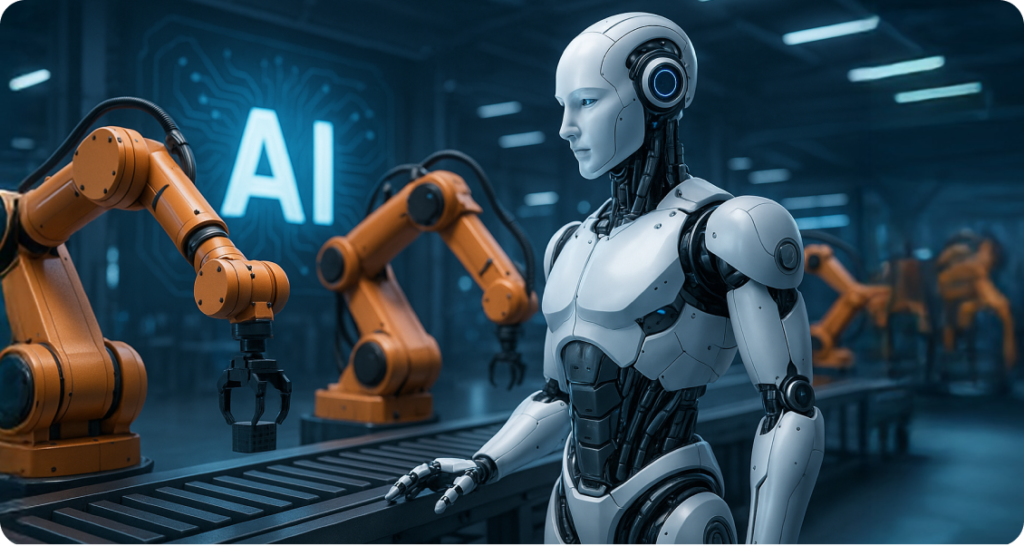
Join Our Newsletter Send Contents Related Blogs What is a Virtual Assistant? A Complete Guide to VAs in 2025 B2B vs B2C CRM: Key Differences, Use Cases & Which One You Need in 2025 What Is a Virtual Assistant ? A Complete Guide to VAs in 2025 B2B vs B2C CRM: Key Differences, Use Cases & Which One You Need in 2025 Other Categories Blog CRM Edit Template B2B vs B2C CRM: Key Differences, Use Cases & Which One You Need in 2025 Whatsapp Linkedin X-twitter Introduction to Industrial Automation Industrial automation is when machines like computers or robots do jobs that people used to do in factories. This helps factories work faster, safer, and better while saving money. By using smart machines and tools, factories can do the same tasks over and over again without making mistakes. These machines help things get made more quickly and with better quality. All around the world, factories are becoming smarter because of automation. “With increased competition and continuous innovations, industrial automation is becoming a vital part of modern manufacturing,” says the report. According to a recent market analysis by Worldwide Market Reports, the Industrial Automation Solutions Market is projected to experience significant growth between 2025 and 2032, driven by rising demand across industries like automotive, pharmaceuticals, and food and beverage. Global leaders such as Siemens, Rockwell Automation, ABB, Schneider Electric, and Mitsubishi Electric are making major investments in programmable logic controllers (PLCs), SCADA systems, and distributed control systems (DCS), further accelerating innovation and adoption. The report emphasizes that new government policies, regional developments, and rapid technology upgrades—including AI and IoT integration—are opening doors for businesses of all sizes to automate smarter and scale faster. With strong tailwinds in place, businesses that act now can gain a competitive edge in a rapidly evolving landscape. For more insights, you can explore the full market breakdown in the Industrial Automation Solutions Market Report (2025–2032). 2. The Evolution of Industrial Automation Industrial automation has come a long way, evolving from simple mechanical systems in the early 1900s to sophisticated automated control systems in today’s modern industries. The journey began with the introduction of assembly lines during the industrial revolution, which streamlined production processes. In the 1960s, the first programmable logic controllers (PLCs) were introduced, revolutionizing the automation industry. With the rise of microprocessors in the 1970s, automation became even more versatile, allowing industries to automate complex tasks with greater precision. Today, industrial automation includes a combination of artificial intelligence (AI), machine learning, robotics, and the Internet of Things (IoT), making it a crucial element in achieving smart manufacturing and Industry 4.0. 3. Key Components of Industrial Automation Industrial automation systems are made up of different parts that work together like a team to help machines and processes run on their own: Sensors and Actuators Sensors collect data from the environment or machinery, like temperature, pressure, and speed. Actuators, on the other hand, perform physical actions, like opening a valve or moving a robotic arm, based on sensor input. Controllers and Software The main control system looks at data from sensors and uses smart programs to make decisions. These programs run on special computers called PLCs or DCS. They help people control and check machines from another place, even if they’re not nearby. Robotics in Industrial Automation Robots play a big role in today’s factories. They can do jobs like putting things together, welding, painting, and packing. Robots work fast and make fewer mistakes. They are also great for doing boring or dangerous jobs that might not be safe for people. 4. Types of Industrial Automation There are three main types of industrial automation. Each type is used for different kinds of factory jobs: Fixed or Hard Automation Hard automation uses special machines made to do one job again and again on big production lines. These machines can’t be changed easily to do other jobs. Programmable or Soft Automation Soft automation uses robots or machines that can be programmed to do different jobs. You can change what they do, which makes them perfect for factories that need to switch tasks often. Flexible Automation Flexible automation can be quickly changed to do different jobs without much delay. It mixes the best parts of hard and soft automation, so it works fast and can do many things. 5. Benefits of Industrial Automation Increased Productivity Automation systems can work all the time without taking breaks. This helps factories make more things faster. Jobs that used to take people a long time can now be done quicker and with fewer mistakes. Enhanced Quality and Consistency Automated systems do the same job the same way every time. This means fewer mistakes and better quality. Products turn out better and more dependable because machines don’t get tired or make mistakes like people can. Safety and Risk Reduction Industrial automation removes humans from dangerous tasks, reducing the risk of workplace injuries. Robots and machines help people by doing dangerous jobs. They weld metal, lift heavy things, and work with harmful chemicals. This way, people don’t get hurt and can stay safe. Cost Efficiency Industrial automation helps businesses save money by doing work without needing many people. It also keeps machines running without long breaks, uses less energy, and makes less waste. All of this helps the business spend less and work better. 6. Challenges in Industrial Automation While industrial automation offers numerous benefits, it also presents certain challenges: High Initial Costs The upfront costs of setting up automated systems can be significant. The machinery, software, and installation require substantial investment, which can be a barrier for smaller businesses. Skills Gap and Training Implementing automation requires skilled professionals who can design, implement, and maintain these systems. Companies must invest in training and upskilling their workforce to handle the new technology. Maintenance and Downtime Even though machines do most of the work, people still need to check and take care of them. If a machine breaks or stops working, it can cost a lot of