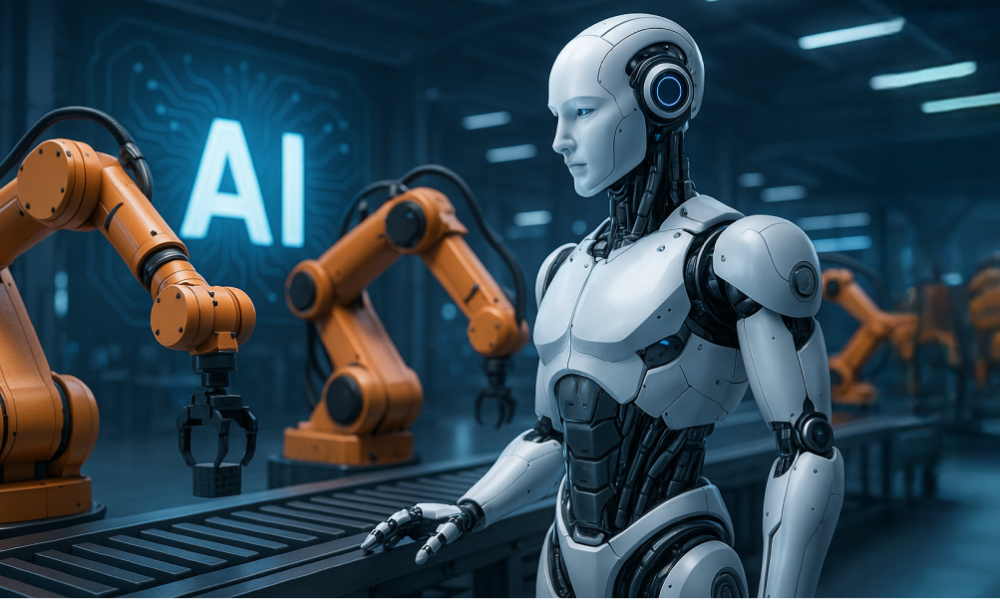
Industrial automation is when machines like computers or robots do jobs that people used to do in factories. This helps factories work faster, safer, and better while saving money.
By using smart machines and tools, factories can do the same tasks over and over again without making mistakes. These machines help things get made more quickly and with better quality. All around the world, factories are becoming smarter because of automation.
“With increased competition and continuous innovations, industrial automation is becoming a vital part of modern manufacturing,” says the report. |
According to a recent market analysis by Worldwide Market Reports, the Industrial Automation Solutions Market is projected to experience significant growth between 2025 and 2032, driven by rising demand across industries like automotive, pharmaceuticals, and food and beverage. Global leaders such as Siemens, Rockwell Automation, ABB, Schneider Electric, and Mitsubishi Electric are making major investments in programmable logic controllers (PLCs), SCADA systems, and distributed control systems (DCS), further accelerating innovation and adoption.
The report emphasizes that new government policies, regional developments, and rapid technology upgrades—including AI and IoT integration—are opening doors for businesses of all sizes to automate smarter and scale faster. With strong tailwinds in place, businesses that act now can gain a competitive edge in a rapidly evolving landscape.
For more insights, you can explore the full market breakdown in the Industrial Automation Solutions Market Report (2025–2032).
Industrial automation has come a long way, evolving from simple mechanical systems in the early 1900s to sophisticated automated control systems in today’s modern industries. The journey began with the introduction of assembly lines during the industrial revolution, which streamlined production processes.
In the 1960s, the first programmable logic controllers (PLCs) were introduced, revolutionizing the automation industry. With the rise of microprocessors in the 1970s, automation became even more versatile, allowing industries to automate complex tasks with greater precision.
Today, industrial automation includes a combination of artificial intelligence (AI), machine learning, robotics, and the Internet of Things (IoT), making it a crucial element in achieving smart manufacturing and Industry 4.0.
Industrial automation systems are made up of different parts that work together like a team to help machines and processes run on their own:
Sensors and Actuators
Sensors collect data from the environment or machinery, like temperature, pressure, and speed. Actuators, on the other hand, perform physical actions, like opening a valve or moving a robotic arm, based on sensor input.
Controllers and Software
The main control system looks at data from sensors and uses smart programs to make decisions. These programs run on special computers called PLCs or DCS. They help people control and check machines from another place, even if they’re not nearby.
Robotics in Industrial Automation
Robots play a big role in today’s factories. They can do jobs like putting things together, welding, painting, and packing. Robots work fast and make fewer mistakes. They are also great for doing boring or dangerous jobs that might not be safe for people.
There are three main types of industrial automation. Each type is used for different kinds of factory jobs:
Fixed or Hard Automation
Hard automation uses special machines made to do one job again and again on big production lines. These machines can’t be changed easily to do other jobs.
Programmable or Soft Automation
Soft automation uses robots or machines that can be programmed to do different jobs. You can change what they do, which makes them perfect for factories that need to switch tasks often.
Flexible Automation
Flexible automation can be quickly changed to do different jobs without much delay. It mixes the best parts of hard and soft automation, so it works fast and can do many things.
Increased Productivity
Automation systems can work all the time without taking breaks. This helps factories make more things faster. Jobs that used to take people a long time can now be done quicker and with fewer mistakes.
Enhanced Quality and Consistency
Automated systems do the same job the same way every time. This means fewer mistakes and better quality. Products turn out better and more dependable because machines don’t get tired or make mistakes like people can.
Safety and Risk Reduction
Industrial automation removes humans from dangerous tasks, reducing the risk of workplace injuries. Robots and machines help people by doing dangerous jobs. They weld metal, lift heavy things, and work with harmful chemicals. This way, people don’t get hurt and can stay safe.
Cost Efficiency
Industrial automation helps businesses save money by doing work without needing many people. It also keeps machines running without long breaks, uses less energy, and makes less waste. All of this helps the business spend less and work better.
While industrial automation offers numerous benefits, it also presents certain challenges:
High Initial Costs
The upfront costs of setting up automated systems can be significant. The machinery, software, and installation require substantial investment, which can be a barrier for smaller businesses.
Skills Gap and Training
Implementing automation requires skilled professionals who can design, implement, and maintain these systems. Companies must invest in training and upskilling their workforce to handle the new technology.
Maintenance and Downtime
Even though machines do most of the work, people still need to check and take care of them. If a machine breaks or stops working, it can cost a lot of time and money. That’s why it’s important to fix and clean machines regularly.
Industrial automation is used in many different industries to help get more work done and use less human effort. It helps things go faster, smoother, and with fewer mistakes.
Manufacturing and Assembly Lines
Automated manufacturing lines are common in industries like electronics, automotive, and textiles. Robots handle assembly tasks, quality inspections, and packaging.
Automotive Industry
Robots are used in the automotive industry for tasks such as welding, painting, and assembly. Automation in this sector has drastically increased production rates and safety.
Food and Beverage Industry
In food factories, automation helps make sure the food is always good and clean. It also helps stop too much food from being wasted. Machines do jobs like packing, sorting, and putting labels on the food.
Pharmaceutical Industry
Medicine factories use automation to make sure the right ingredients are used in the right amounts. It also helps keep everything safe and clean. Machines also help pack and label the medicine quickly and correctly.
Integration with AI and Machine Learning
AI and machine learning are making automation smarter. These tools help machines learn from data, fix problems before they happen, and make work faster and better.
The Role of IoT in Automation
IoT means things like machines and sensors can talk to each other. This helps people watch and control them in real time. With IoT, work gets done faster, machines stop less, and better choices can be made using the data.
Collaborative Robots (Cobots)
Cobots, or collaborative robots, are made to work with people. They help by doing jobs that are hard, boring, or need to be very exact. Cobots can lift heavy things, do the same task again and again, and help with careful work, while people watch and guide them.
Industrial automation isn’t just something cool for now—it’s the future of how we make things and get work done. As new technology keeps getting better, automation will play an even bigger role in factories and other industries all around the world. From smart robots that use AI to machines that are connected through the Internet of Things (IoT), automation is ready to make work faster, safer, and more productive in the years ahead.
When businesses start using these new tools, they can save money, stay ahead of the competition, and keep their workers safe. The future of industrial automation looks really exciting, and there’s no limit to what it can do.